How to Choose the Best Test Facilities for Your Testing Needs?

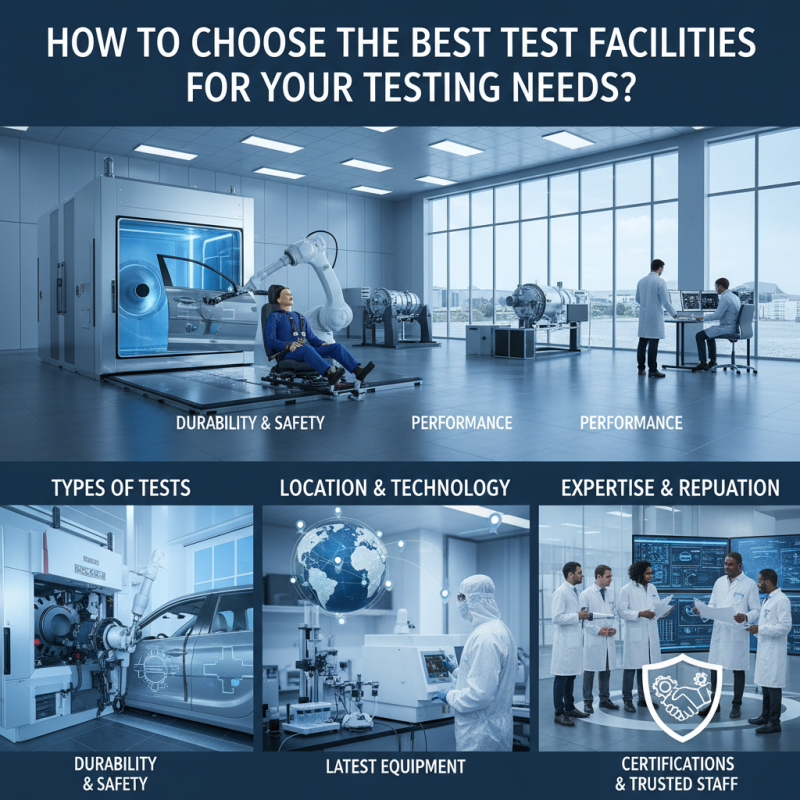
Choosing the right test facilities is vital for any product development process. The right facility can influence test outcomes and, ultimately, product success. Effective testing requires a clear understanding of your specific needs. It's essential to consider the types of tests you need. Different facilities focus on various testing criteria such as durability, performance, or safety.

When evaluating test facilities, think about location and logistics. A nearby facility can save time and costs. However, the quality of services offered should never be compromised. Sometimes, reaching out to specialized labs is necessary, even if they are far away. It's worth noting that not every facility is equipped with the latest technology. Some may lack crucial certifications.

In your search, pay attention to the staff's expertise and the reputation of the facilities. A facility with experienced professionals can enhance the testing process. Remember, not all test facilities will meet your expectations. Reflect on past experiences and look for improvements in your selection criteria. Finding the right facility requires time and careful consideration, but it’s an investment in quality assurance.
How to Choose the Best Test Facilities for Your Testing Needs?

Identifying Your Specific Testing Requirements and Objectives

Identifying your specific testing requirements is vital. Every industry has unique needs, and understanding these can guide your selection of test facilities. A recent industry report indicates that 70% of project delays stem from inadequate testing strategies. Therefore, detailed planning is essential.

Consider the type of tests needed. Are you focusing on durability, safety, or compliance? Each category has different facility capabilities. For instance, a lab specializing in materials testing may not have the right equipment for software testing. Report data shows that 60% of companies fail to align their testing methods with project goals, leading to wasted resources.

Budget constraints are also a factor. Balancing quality with cost is a common challenge. Facilities that offer a lower price may lack essential certifications or advanced technology. It's a false economy if the results don't meet industry standards. Reflect on previous projects; learn from past mistakes. A thorough evaluation process is not just beneficial, it’s necessary for successful outcomes.

How to Choose the Best Test Facilities for Your Testing Needs? - Identifying Your Specific Testing Requirements and Objectives

Testing Type Facility Location Accreditations Capabilities Availability
Mechanical Testing New York, USA ISO 17025 Tensile, Compression, Fatigue Immediate
Electrical Testing California, USA ISO 9001 EMC, Safety, Performance 2 Weeks
Chemical Testing Texas, USA ISO 17025, ASTM Material Composition, Toxicity 1 Month
Environmental Testing Florida, USA ISO 17025 Thermal, Humidity, Vibration 3 Weeks
Software Testing Illinois, USA CMMI Level 3 Functional, Load, Security 4 Weeks

Evaluating the Location and Accessibility of Testing Facilities

How to Choose the Best Test Facilities for Your Testing Needs?

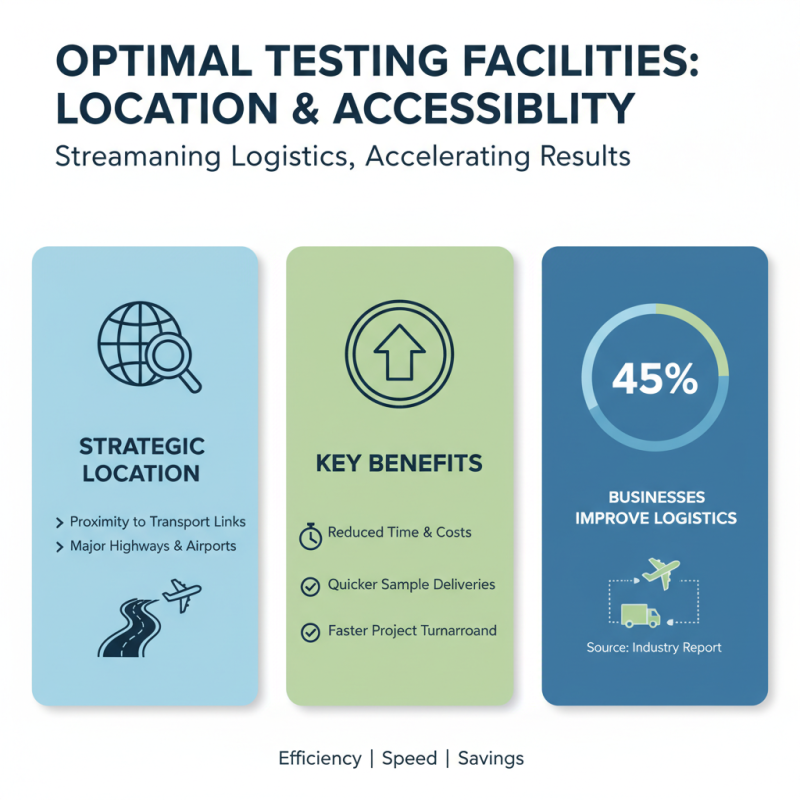
When selecting testing facilities, location and accessibility play crucial roles. A facility's proximity to key transport links can save time and reduce costs significantly. According to a recent industry report, 45% of businesses see improved logistics when their testing facilities are close to major highways and airports. This proximity can facilitate quicker sample deliveries and faster project turnaround times.

Moreover, consider the accessibility of the facility itself. An easy-to-navigate location ensures that team members can reach the site without hassle. A facility that requires extensive traveling or complicated routes can lead to delays and inefficiencies. Data shows 30% of testing delays stem from logistical challenges. Selecting an accessible site can mitigate these issues while enhancing collaboration among teams.

However, not all facilities may meet specific accessibility standards. Some may lack adequate parking or public transport options. Facilities must also be flexible enough to accommodate last-minute changes. Reflecting on these factors helps in making better decisions. Prioritizing a location that promotes ease of access can directly impact project success rates and overall productivity.

Assessing the Equipment and Technologies Available at Facilities

How to Choose the Best Test Facilities for Your Testing Needs?

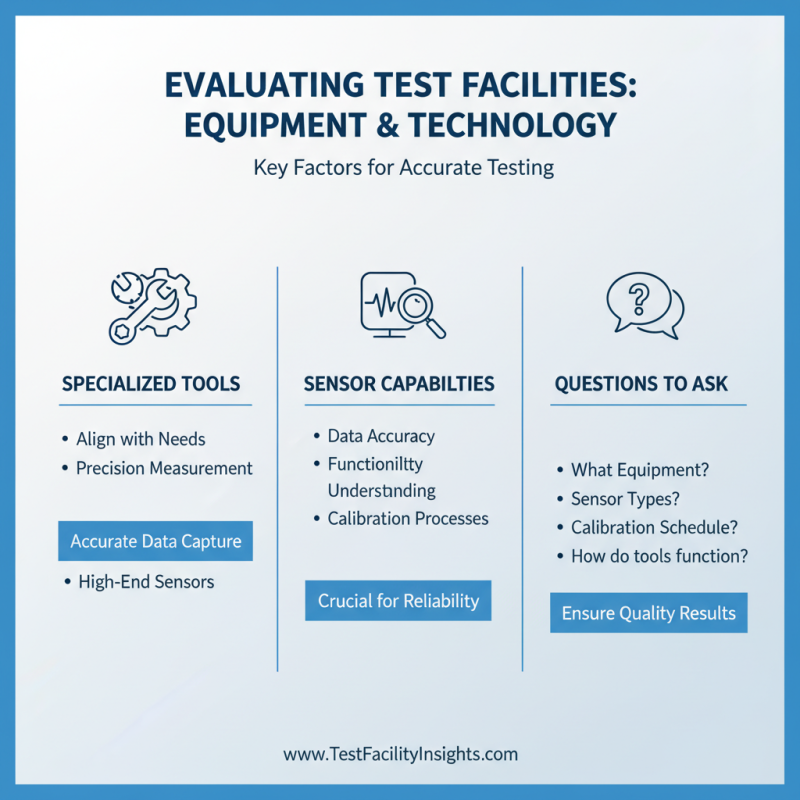
When evaluating test facilities, the available equipment and technologies are key factors. Look for specialized tools that align with your testing needs. For instance, if you require precision measurement, consider facilities equipped with high-end sensors. These sensors should offer accurate data capture. Understanding how these tools function is crucial. Ask potential facilities about their calibration processes.

Further, explore the technologies they use. Are they equipped with the latest software for data analysis? Advanced analytics tools can significantly enhance your testing results. However, not all tools are equal. Each facility may have its unique strengths and weaknesses. It’s essential to verify their reliability and effectiveness for your specific purpose.

Dive deeper into the specifics of equipment usage. Some facilities may have state-of-the-art machines but lack an experienced staff. This imbalance can lead to subpar results. Don’t hesitate to ask for case studies or examples of past work. Understanding their previous outcomes will provide insight into their capabilities. It's wise to reflect on how these aspects align with your project's goals.

Reviewing the Expertise and Qualifications of Testing Personnel

Selecting the right test facility is crucial for accurate results. The expertise and qualifications of testing personnel play a vital role. Personnel with extensive training assure that testing methods are correctly implemented. This expertise can impact the reliability of your data.

Consider the staff’s background. Look for certifications related to testing methodologies. Experience counts too. A team member with years of experience can often identify issues that a newcomer might miss.

Tip: Ask for qualifications. Don’t hesitate to request resumes or profiles of the testing team.

Not all facilities prioritize skilled personnel. Some may hire based on cost-cutting, compromising quality. This can lead to flawed results. Trusting a facility with a solid reputation is essential, but always verify their claims.

Tip: Check for peer reviews and testimonials. They can provide insights about the facility's personnel competence.

It's crucial to engage with the testing team. Have conversations about their processes. Test how knowledgeable they are in their field. Engaging them in discussions can reveal their depth of understanding.

Testing Facilities Expertise Overview

Comparing Costs and Services Offered by Different Facilities

When comparing costs and services of various testing facilities, several factors come into play. A recent industry report revealed that testing costs can vary greatly across different facilities—ranging from $50 to $500 per hour. This wide gap reflects the differences in equipment, expertise, and turnaround times offered by each facility. Understanding what you need is key. Do you require specialized testing? Or are standard tests sufficient?

Quality of service is often more important than cost alone. A facility's reputation for accuracy can make or break a project. Data shows that facilities with higher prices tend to have better quality control measures in place. However, not every high-cost service translates to the best results. Sometimes, smaller labs offer tailored services and personalized support that larger ones may lack.

Additionally, consider the facility's location. Laboratories that are further away may increase shipping times and costs, impacting your project timeline. Some facilities offer remote consultations to minimize delays. You need to weigh these factors against your specific testing needs and budget constraints. This decision can be challenging, and it’s crucial to reflect on what aspects matter most for your project.